Key Takeaways
- A minor, isolated AC issue does not automatically mean the entire system needs replacement.
- Frequent repairs, uneven temperatures, high indoor humidity, and rising electricity bills can indicate broader equipment or airflow issues.
- The best decision considers the system’s age, repair history, condition, warranty coverage, comfort, and expected reliability.
- Routine filter changes and preseason professional service can help identify avoidable problems early.
In Cocoa and across Brevard County, a dependable air conditioner is more than a convenience during long, humid Florida cooling seasons. When comfort slips, homeowners need to know whether they are facing a practical repair or a signal that it is time to plan for a new system.
For a local evaluation, A/C installation services from All Brevard Air & Heat connect system selection with repair and maintenance considerations for homes and businesses in Cocoa and throughout Brevard County. The Florida-licensed HVAC company focuses on diagnosing performance concerns, addressing common repair needs, and helping property owners consider equipment size and efficiency before making a major decision.
Why the Repair-or-Replace Choice Feels Complicated
An AC system can still produce cool air, even if it operates less effectively than it once did. It may run longer, leave certain rooms warm, struggle with moisture, or make unusual noises. Some of these symptoms have straightforward causes, such as a clogged filter or blocked condensate drain. Others can involve aging components, ductwork issues, refrigerant concerns, or equipment that no longer suits the home.
A repair is often sensible when the unit is relatively new, the diagnosis is clear, and the rest of the system is performing well. The decision becomes more difficult when repair visits become routine, or the same comfort problem keeps returning during Cocoa’s hottest months.
Start With the Symptoms
Before approving work, note what the system is doing and when the problem appears. That information can help a technician narrow down the cause.
- Weak airflow from one or more supply vents
- Rooms that remain warm while the system runs
- Grinding, squealing, rattling, burning odors, or vibration
- Water near the indoor equipment or drain line
- Short cycling, unusually long run times, or repeated breaker trips
- Higher electric bills with no meaningful change in household use
- Indoor air that feels damp even when the thermostat is set normally
Do not assume that one symptom identifies one failure. Uneven cooling, for example, can involve airflow, duct leakage, thermostat placement, dirty coils, insulation, or the equipment itself.
When Repair Usually Makes Sense
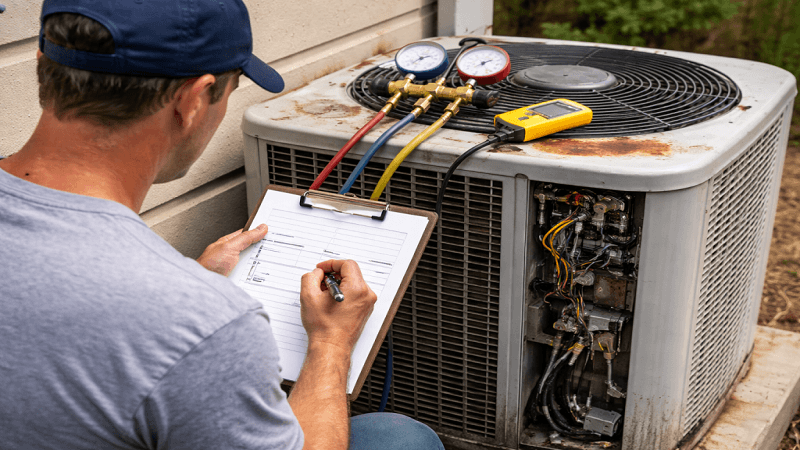
Repair is commonly the better first step when the equipment has been maintained, and the problem appears to be limited to one serviceable part. Examples include a failed capacitor, a worn contactor, a thermostat issue, a clogged drain, or a dirty coil. A qualified technician should confirm the cause, especially where electrical components or refrigerant are involved.
- The system is relatively new and has not needed repeated repairs.
- The home still cools evenly and maintains acceptable humidity.
- The repair estimate is reasonable for the system’s condition.
- The failed component or labor may be covered by a warranty.
- The unit has a consistent maintenance history.
When Replacement Deserves a Closer Look
Older equipment is not automatically beyond repair, but age changes the calculation. ENERGY STAR identifies systems more than 10 years old, frequent repairs, increasing energy bills, uneven temperatures, humidity problems, excess dust, and noise as reasons to seek a professional assessment of the equipment and overall system.
- The AC needs major work after several recent repair visits.
- Cooling performance or humidity control has declined.
- Parts are difficult to obtain or disproportionately expensive.
- The repair cost represents a large share of the cost of a comparable replacement project.
- The current unit uses an older refrigerant or no longer fits the home’s needs.
Use a Simple Decision Check
- Write down the model number, approximate installation date, and warranty details.
- Review repair invoices from the past two or three years.
- Request a written diagnosis and itemized repair estimate.
- For substantial repairs, ask for a replacement estimate as well.
- Compare more than price, including expected reliability, comfort, energy use, and installation scope.
- Ask whether ducts, drainage, airflow, electrical connections, and sizing were considered.
Some homeowners use an age-times-repair-cost rule as a rough budgeting shortcut. It can be useful for perspective, but it is not a replacement for a complete diagnosis. Installation quality, maintenance history, and the unit’s actual condition matter just as much.
Maintenance That Helps Prevent Larger Problems
Florida heat puts steady demand on cooling equipment. Following an annual maintenance checklist for cooling equipment can help homeowners focus on filters, thermostat settings, condensate drainage, electrical connections, coils, refrigerant level, and blower airflow.
- Inspect or replace filters regularly during heavy-use periods.
- Keep leaves, grass clippings, and stored items away from the outdoor unit.
- Keep supply and return vents open and unobstructed.
- Watch for drain-line water, new odors, and changes in operating sounds.
- Schedule professional service before peak summer demand whenever possible.
What Homeowners Should Not Try to Fix
Turn the system off and contact a professional for refrigerant leaks, electrical wiring issues, failed capacitors or contactors, compressor concerns, burning smells, recurring frozen coils, or repeated breaker trips. Resetting a breaker repeatedly can mask an issue rather than solve it.
Questions to Ask Before Approving Work
- What caused the failure, and is there evidence of another developing problem?
- How long should this repair reasonably be expected to last?
- Is any part or labor covered under warranty?
- What would a comparable replacement involve?
- Will the proposed equipment be properly sized for the home?
- What maintenance should be completed after the repair?
Common Questions About AC Repair and Replacement
How old is too old for an air conditioner?
Age alone does not decide the outcome. A well-maintained older system with a minor fault may still be worth repairing, while a younger unit with ongoing performance issues needs closer investigation.
Does a higher energy bill mean the AC must be replaced?
No. Dirty coils, airflow restrictions, duct leaks, thermostat settings, severe weather, and declining equipment efficiency can all affect energy use. An inspection helps separate a repairable problem from a larger system concern.
When should a homeowner get a second opinion?
A second opinion is reasonable when the diagnosis is unclear, the repair is expensive, replacement is recommended without detailed support, or the estimate does not explain what caused the failure.
Final Decision Checklist
Confirm the diagnosis, review the system’s age and repair history, compare written options, check warranty coverage, and consider how well the unit handles comfort and humidity. In Cocoa’s demanding climate, the right choice is the one that offers dependable value and a realistic path to reliable cooling, not simply the lowest immediate price.