Warning Signs Your Inwood Property Needs an Awning Upgrade
In Inwood, WV, our homes constantly battle the elements. From scorching summer sun to heavy rainfall and winter snow, these weather patterns can make enjoying our outdoor spaces challenging. They also lead to issues like fading patio furniture, uncomfortable indoor temperatures, and even slippery walkways. These problems can increase our energy bills and reduce the curb appeal of our properties. That’s why many homeowners consider adding awnings. Finding a reliable awnings installation contractor in Inwood, WV is key to protecting our homes, enhancing comfort, and saving money. This guide will help us understand the benefits of awnings and how to choose the right professional for the job.
Awnings offer practical solutions, providing shade, protection from rain, and even reducing indoor heat. They can transform an ordinary patio into a comfortable outdoor living area, boosting our home’s energy efficiency and curb appeal. This comprehensive guide will walk us through everything we need to know about selecting the best awnings and finding a trustworthy installation contractor in Inwood, WV. We will cover common signs your home needs an awning, how local climate affects choices, different awning types, and essential contractor vetting tips.
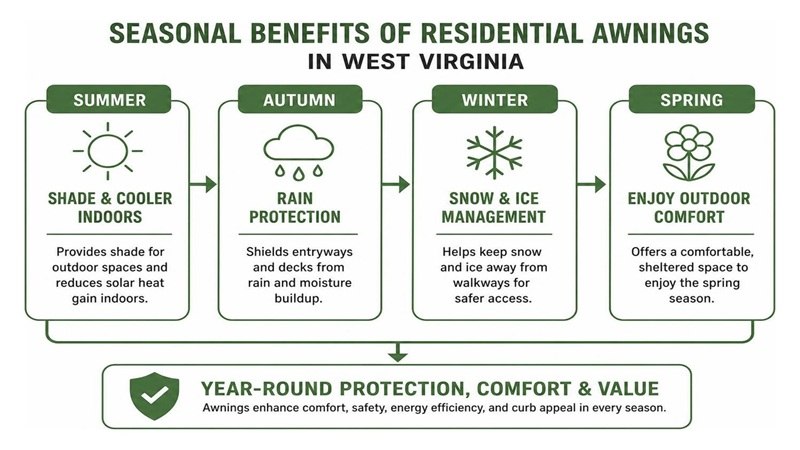
Awnings are more than just a stylish addition; they are a strategic investment for any Inwood homeowner. Consider the seasonal benefits: in the intense summer months, they provide crucial shade, making outdoor spaces usable and reducing solar heat gain indoors. When autumn brings heavy rains, awnings protect entryways and decks from moisture accumulation. During winter, they can help keep snow and ice away from key pedestrian areas, enhancing safety. And as spring arrives, they offer a comfortable, sheltered spot to enjoy the blooming landscape. This year-round utility makes them an invaluable asset for homes in West Virginia’s varied climate.
Our homes in Inwood, WV, are constantly exposed to the elements, and over time, this exposure can take a toll on our outdoor living spaces and even impact our indoor comfort. Recognizing the early warning signs that your property could benefit from an awning upgrade is crucial for protecting your investment and enhancing your quality of life. These signs often manifest in ways that affect both the aesthetics and functionality of your home.
One of the most common indicators is the rapid deterioration of outdoor furniture and decking. If you notice your patio chairs, cushions, or wooden deck boards fading, cracking, or becoming brittle within months, it’s a clear sign of excessive UV exposure. The sun’s powerful rays not only damage these materials but also contribute to an uncomfortably hot outdoor environment, making your patio or deck unusable during peak daylight hours. This solar heat can also translate indoors, leading to higher cooling bills as your air conditioning system works harder to combat the heat seeping through windows and walls.
Beyond comfort and material degradation, safety can also be a concern. Unprotected entryways and walkways are prone to becoming slippery during rain or freezing conditions, posing a slip-and-fall risk. An awning can act as a shield, keeping these areas drier and safer. Furthermore, consistent exposure to rain and sun can lead to premature weathering of your home’s exterior, including siding and window frames, potentially leading to costly repairs down the line.
Identifying Exterior Wear and Solar Heat Accumulation
The relentless sun in Inwood, especially during the warmer months, can lead to several issues that impact both your home’s exterior and interior. For instance, direct sunlight on windows can cause significant indoor glare, making it difficult to relax or work in certain rooms without constantly adjusting blinds or curtains. More critically, this solar heat gain can drastically increase the surface temperature of your patio or deck, turning it into an oven-like environment that’s too hot to enjoy.
Over time, prolonged UV exposure can also cause the exterior paint or siding on your home to fade unevenly, diminishing your property’s curb appeal. This isn’t just a cosmetic issue; fading can sometimes indicate a breakdown in the protective layers of your home’s exterior materials. Additionally, areas of your home that are consistently exposed to direct sun and then rain can experience moisture pooling, particularly on horizontal surfaces or near foundations, potentially leading to water damage or mold growth if not properly managed. An awning strategically placed can mitigate these issues by providing consistent shade and redirecting rainwater away from vulnerable areas.
Addressing Weather Hazards on Decks and Walkways
Inwood’s climate, with its distinct four seasons, presents unique challenges for outdoor spaces. Winter brings the risk of ice accumulation on steps and walkways, creating dangerous conditions. Even moderate rainfall can make uncovered decks and entryways slick and hazardous. An awning provides a crucial layer of protection, significantly reducing the amount of rain and snow that reaches these surfaces. By keeping them drier, awnings help prevent the formation of ice in colder temperatures and reduce the slipperiness caused by rain runoff.
This added protection not only enhances safety but also extends the lifespan of your deck and porch materials by shielding them from the constant cycle of wet and dry, freeze and thaw. For example, a well-placed awning over a front door can prevent moisture from seeping into the door frame or causing the wood to rot prematurely. It’s a proactive step in safeguarding your home against the elements, ensuring that your outdoor spaces remain safe, functional, and well-maintained throughout the year.
Evaluating Awnings Installation Expertise Inwood Homeowners Rely On
When it comes to enhancing your Inwood home with an awning, selecting the right contractor is as important as choosing the right awning itself. The quality of installation directly impacts the awning’s longevity, performance, and safety. Therefore, homeowners need to be diligent in their contractor vetting process, focusing on specific credentials and a proven track record. This process goes beyond simply getting a quote; it involves ensuring the installer possesses the necessary expertise and adheres to professional standards. For comprehensive insights into what to look for, exploring resources focused on Awnings installation expertise Inwood can provide valuable guidance.
A reputable contractor will demonstrate transparency and professionalism from the initial consultation to the final installation. They should be able to clearly articulate their process, provide examples of past work, and offer references. In Berkeley County, where Inwood is located, understanding local regulations and contractor requirements is paramount. We should prioritize contractors who are not only experienced but also deeply familiar with the nuances of installing awnings in our specific climate and community.
Key Credentials and Awnings Installation Expertise Inwood Homeowners Should Demand
When evaluating potential awning installation contractors, several key credentials should be at the top of your checklist. First and foremost, ensure the contractor is properly licensed to operate in West Virginia. This confirms they meet state-mandated standards for competency and business practices. Beyond licensing, verifying their liability insurance and worker’s compensation coverage is critical. This protects you from financial responsibility in case of accidents or damage during the installation process.
Experience is another non-negotiable factor. Look for contractors with a solid history of awning installations, specifically in residential settings, if that’s your need. Ask about their warranty terms for both the awning product and the installation itself. A strong warranty indicates confidence in their work and materials. Transparent upfront pricing and clear communication regarding down payments and payment schedules are also hallmarks of a trustworthy contractor. While we won’t discuss specific costs, understanding how factors like material choice, awning type, and installation complexity influence the overall investment is important.
It’s also beneficial to check their standing with consumer protection organizations. For instance, in Inwood, there are 3 BBB accredited businesses and 16 A-rated businesses among contractors. While these statistics are for fencing contractors, they highlight the importance of looking for similar accreditations and ratings for awning installers. A strong local reputation, often reflected in online reviews and testimonials, can provide further assurance of their quality and reliability.
Verifying Awnings Installation Expertise Inwood Contractors Offer for Custom Projects
Awning installation isn’t always a one-size-fits-all job. Many Inwood homes have unique architectural features or specific needs that require custom solutions. This is where a contractor’s specialized expertise truly shines. When discussing your project, inquire about their experience with various custom mounting scenarios. Can they securely install an awning on different surfaces like brick, siding, or even integrate it with existing roof structures?
For homes that require additional height or wish to keep the awning out of sight when retracted, roof mounts or soffit brackets might be necessary. A skilled contractor will assess your home’s structural integrity and recommend the most appropriate and secure mounting method. They should be proficient in brick anchoring techniques that ensure stability without compromising your home’s masonry, and understand how to effectively integrate awnings with various siding types to prevent water intrusion. Furthermore, given West Virginia’s occasional strong winds, discuss the wind ratings of the awnings they offer and their installation methods to ensure maximum stability and durability against local weather conditions. A contractor who can confidently address these custom aspects demonstrates a higher level of Awnings installation expertise Inwood homeowners can trust for a tailored and robust solution.
Awning Types and Material Performance for Eastern Panhandle Weather
The Eastern Panhandle of West Virginia, including Inwood, experiences a diverse climate characterized by hot, humid summers, cold winters with snow, and significant temperature swings throughout the year. These environmental factors play a crucial role in determining the most suitable type of awning and the materials it should be made from. Understanding how different awning types and materials perform under these conditions is essential for making an informed decision that ensures longevity, functionality, and aesthetic appeal.
When selecting an awning for your Inwood home, consider how well it will withstand the local Appalachian climate. This means evaluating its resistance to strong winds, its capacity to handle snow loads in winter, and its ability to endure frequent temperature swings that can cause materials to expand and contract. The choice between retractable and fixed awnings often comes down to a balance of flexibility, durability, and maintenance. Materials like durable acrylic fabric for retractable options or robust aluminum frames for fixed structures are popular choices, each offering distinct advantages.
Here’s a comparison of key features for retractable and fixed awnings:
Retractable Systems for Flexible Seasonal Protection
Retractable awnings offer unparalleled flexibility, allowing Inwood homeowners to enjoy shade when needed and open skies when desired. This adaptability makes them particularly well-suited for our region’s varied weather. During hot summer days, they provide instant relief from the sun, making patios and decks comfortable. When a storm rolls in, or during the colder months, they can be retracted, protecting the fabric from harsh elements like heavy snow, ice, and strong winds. This retraction capability significantly extends the lifespan of the awning fabric and mechanism.
Modern retractable awnings often come with advanced features such as motorized operation for effortless extension and retraction at the touch of a button. For those preferring a simpler approach, manual crank systems are also available. Many homeowners opt for smart features like sun sensors that automatically extend the awning when the sun is intense and wind automation that retracts it when high winds are detected, safeguarding the unit. The ability for winter retraction is a major benefit in Inwood, preventing snow and ice accumulation on the awning, which could otherwise cause damage. This flexibility not only enhances convenience but also contributes to the awning’s durability by minimizing exposure to unnecessary wear and tear.
Stationary and Fixed Metal Awnings for Year-Round Coverage
For homeowners in Inwood seeking continuous, year-round protection, stationary or fixed awnings are an excellent choice. Unlike their retractable counterparts, these awnings are permanently installed, providing constant shade and shelter. Their robust design makes them particularly well-suited to withstand the more extreme aspects of the Eastern Panhandle climate, including heavy snowfalls and strong winds.
Fixed awnings rely on sturdy structural framing, typically made from aluminum or steel, which is securely anchored to the home. This strong construction allows them to handle significant snow loads without risk of collapse, offering peace of mind during winter storms. They provide continuous shade throughout the day, which is ideal for areas like entryways, windows that receive intense afternoon sun, or permanent outdoor seating areas. Many homeowners choose entryway canopies to protect visitors from rain and snow, while also preventing moisture from reaching the front door and steps. While they don’t offer the flexibility of retraction, their durability and constant protective presence make them a low-maintenance and highly effective solution for specific needs, especially in areas where consistent shelter is paramount.
Awning Installation Process, Permitting, and Local Cost Factors
Embarking on an awning installation project in Inwood, WV, involves more than just choosing a style and color. A clear understanding of the installation process, potential permitting requirements, and factors influencing the overall investment is crucial for a smooth and successful outcome. From the initial consultation to the final touches, each step plays a vital role in ensuring your new awning functions perfectly and complies with local regulations.
A professional installation typically begins with a thorough project consultation where your needs and preferences are discussed. This is followed by a detailed structural assessment of your home to determine the best mounting location and method. While the actual on-site installation of many awnings can be completed surprisingly quickly—often within a four-hour installation window—the preceding planning and preparation are essential. Homeowners in Inwood also need to be aware of potential Berkeley County permits and any specific HOA guidelines that might apply to exterior modifications. Although we won’t delve into specific pricing, factors such as material costs, the complexity of the awning system, and labor rates will influence the total investment.
Project Planning, Permitting, and Architectural Guidelines
The journey to a new awning begins with meticulous planning. Your chosen contractor should conduct a comprehensive site evaluation to understand your home’s unique characteristics, sun exposure patterns, and existing structural framing. This assessment is critical for determining the most secure and effective mounting solution. During this phase, it’s also important to discuss your aesthetic preferences and how the awning will complement your home’s architectural style.
A significant aspect of planning in Inwood involves navigating local regulations. While many smaller awnings may not require a permit, larger or more complex installations might necessitate Berkeley County permits. Your contractor should be knowledgeable about these requirements and assist you in the application process. Additionally, if your home is part of a homeowners’ association, you’ll need to check your HOA covenants for any specific rules regarding exterior additions. Many HOAs have guidelines on awning size, color, material, and placement to maintain community aesthetics. Ensuring zoning compliance and adherence to all architectural guidelines upfront can prevent delays and potential issues down the line, making the entire process much smoother.
Installation Timelines and Maintenance Best Practices
Once the planning and approvals are in place, the physical installation can proceed efficiently. For many standard awning installations, a professional team can complete the work on-site in approximately four hours, from start to finish. This typically involves securely attaching the bracket mounting to your home’s structural framing, carefully installing the awning unit, and ensuring proper fabric tensioning for a smooth, taut appearance. If your awning is motorized, the process will also include electrical hookups to integrate it with your home’s power supply. After installation, the contractor should test the awning’s functionality and clean up the work area, leaving your new outdoor space ready for enjoyment.
To ensure your awning remains in excellent condition through West Virginia’s four seasons, regular maintenance is key. This includes routine fabric washing to remove dirt, pollen, and mildew, which can extend the life and vibrancy of the material. For retractable awnings, it’s particularly important to practice winterizing by retracting them during heavy snowfalls and strong winds to protect the fabric and mechanism from damage. Periodically inspecting the frame and mounting hardware for any signs of wear or loosening is also a good practice. By following these simple maintenance best practices, you can maximize your awning’s lifespan and continue to enjoy its benefits for many years to come.
Frequently Asked Questions About Awning Installations in Inwood, WV
Homeowners in Inwood often have specific questions when considering an awning installation. Addressing these common concerns can help clarify the benefits, process, and local considerations involved in adding this valuable home improvement.
How much can an awning reduce home cooling costs in Inwood?
Awnings are remarkably effective at reducing solar heat gain, which can significantly impact your home’s energy bills in Inwood. By strategically blocking direct sunlight before it reaches your windows, awnings act as a thermal barrier. This solar blocking reduces the amount of heat absorbed by your home’s interior, decreasing the workload on your air conditioning system. Studies have shown that awnings can reduce solar heat gain through windows by up to 77% on west-facing windows and 65% on south-facing windows. This efficiency translates directly into lower energy consumption for cooling. While specific savings vary based on home orientation, window efficiency, and local climate, it’s not uncommon for homeowners to see their AC costs reduced by 15-30% during peak summer months. This heat reduction makes your home more comfortable and contributes to substantial long-term savings on your energy bills.
Do I need a permit or HOA approval for an awning installation in Inwood, WV?
The requirement for a permit or HOA approval for awning installation in Inwood, WV, can vary. Generally, any significant exterior modification to your home, especially those involving structural changes or affecting property lines, might require a permit from Berkeley County. Smaller, non-structural awnings, particularly retractable ones, may not always require a permit, but it’s always best practice to confirm with your local building department.
Beyond county regulations, if your property is part of a homeowners’ association (HOA), you will almost certainly need to obtain HOA covenants approval before installation. HOAs often have specific rules regarding the size, color, style, and placement of awnings to maintain community aesthetic standards. A reputable awning installation contractor will be familiar with these local requirements and can assist you in determining if permits or HOA approvals are necessary and help navigate the application process, ensuring your project is fully compliant.
How long does a professional awning installation take from start to finish?
The total time for a professional awning installation project in Inwood can be broken down into several stages, from initial consultation to final completion. The consultation timing and planning phase, which includes site assessment, material selection, and obtaining any necessary permits or HOA approvals, can take anywhere from a few days to a few weeks, depending on the complexity of the project and the responsiveness of local authorities or your HOA.
Once all preparations are complete and the awning has been fabricated (which has its own fabrication window), the actual on-site installation is typically quite efficient. For most residential awnings, a skilled team can complete the physical installation in approximately four hours. This includes mounting the frame, attaching the fabric, making any electrical connections for motorized units, and thoroughly testing the awning’s operation. While the overall timeline can vary, the hands-on installation portion is often a swift and streamlined process.
Conclusion
Investing in an awning for your Inwood home is a decision that offers substantial investment value, extending far beyond mere aesthetics. From protecting your outdoor furniture and decking from harsh UV rays to significantly reducing your energy bills by mitigating solar heat gain, awnings provide comprehensive home protection. They transform underutilized outdoor spaces into comfortable, shaded retreats, enhancing your home’s curb appeal and overall functionality.
The key to unlocking these benefits lies in choosing the right contractor selection. By prioritizing licensed, insured, and experienced professionals who understand the unique climate challenges of Inwood, you ensure a high-quality installation that stands the test of time. A well-installed awning, crafted from durable materials, promises long-term durability and enjoyment, making it a wise and rewarding enhancement to any Inwood property.