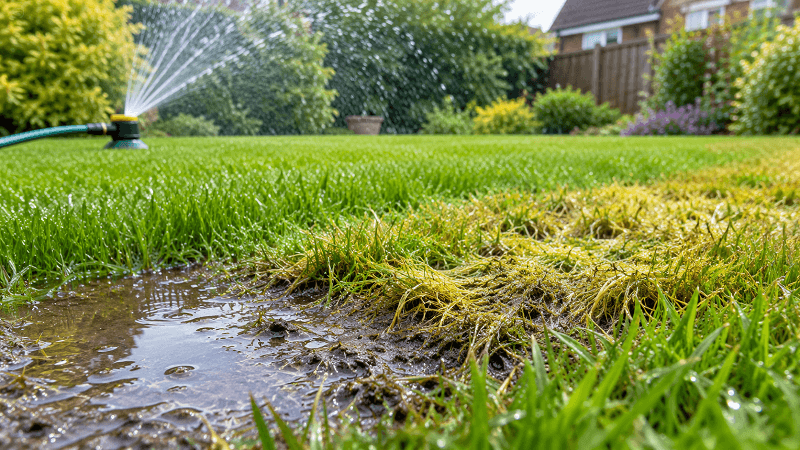
If you’ve ever stood in your back garden with a hosepipe, staring blankly at a patch of brown grass, you’ve probably been tempted to soak everything in sight.
The British summer has a habit of making us feel like amateur firefighters, desperately trying to save a scorched landscape that was lush only three weeks ago.
However, overwatering doesn’t just waste water and money. It actively sabotages the very lawn you’re trying to nurture, creating problems that no amount of additional watering will fix.
Here’s what actually happens when your grass gets more hydration than it bargained for.
Yes, and It Starts with the Roots
Your lawn’s root system behaves much like you would if you were forced to stay in a bathtub for a long time. It becomes weak, shallow, and utterly dependent on constant moisture to survive.
Grass roots naturally grow deeper when they have to search for water, creating a robust network that anchors plants and helps them weather dry spells.
Overwatering removes any incentive for this downward growth, leaving roots clustered near the surface where they’re vulnerable to heat, foot traffic, and the slightest dry period.
These shallow roots create a lawn that looks deceptively lush but crumbles under pressure. One week of normal summer weather, and your previously green carpet turns brown faster than toast under a grill.
Your waterlogged soil also suffocates roots by displacing oxygen, which grass desperately needs to function. Plants essentially drown in slow motion, unable to absorb nutrients even when they’re present in the soil.
The Fungal Growth Arrives Next
Damp conditions are an open invitation for every fungal disease that plagues British lawns. Red thread, Fusarium, and snow mould all thrive when grass stays wet for extended periods of time.
These diseases create unsightly patches that range from pink to brown, destroying the uniform appearance most homeowners want. Treating fungal infections requires specific products and careful timing, turning a simple maintenance task into a complicated ordeal.
The fungi spread rapidly because overwatered grass lacks the natural defences that healthy plants possess. Your lawn becomes a breeding ground for problems that wouldn’t exist if the soil had a chance to dry out between waterings.
Prevention is simple but requires restraint that goes against every instinct telling you to water more. Many UK homeowners seek expert lawn care advice only after fungal problems appear, when early, moderate watering would have prevented the issue entirely.
Moisture-Loving Weeds Take Over
There are certain weeds that thrive in the damp conditions caused by overwatering. For example, moss colonises damp patches with alarming speed, forming dense mats that choke out grass and create slippery surfaces.
Annual meadow grass also thrives in wet soil, spreading through your lawn and dying back in summer to leave brown patches everywhere. Pearlwort, chickweed, and other moisture-loving varieties can quickly take over weakened areas of the lawn.
These weeds compete with your grass for nutrients and space, but they are far better adapted to waterlogged conditions. Too much watering can end up encouraging weed growth while leaving your lawn weaker and more vulnerable over time.
Fighting back requires reducing water, improving drainage, and often reseeding bare patches where weeds have taken hold.
Thatch Builds Up Faster
Thatch is the layer of dead grass stems and roots that accumulates between the soil and the living grass. A thin layer is normal and even beneficial, but overwatering accelerates thatch development to problematic levels.
The excess moisture slows decomposition while encouraging rapid grass growth, creating more dead material than soil microbes can process. This thick thatch layer becomes a spongy barrier that blocks water, air, and nutrients from reaching roots.
Your lawn starts behaving like a poorly designed sponge, with water pooling on top instead of soaking through to where it’s needed. Fertiliser struggles to reach the roots properly, leaving the grass above looking weak and unhealthy despite all your efforts.
Removing excessive thatch requires scarifying, which is labour-intensive and temporarily makes your lawn look worse than it did before.
Pests Move In Permanently
Waterlogged lawns attract leatherjackets, chafer grubs, and other pests that damage grass roots and create a host of other problems you’d rather not deal with. These insects thrive in moist soil, and their populations explode when conditions remain consistently damp.
The larvae feed on roots throughout autumn and winter, leaving dead patches that appear in spring when you’re least prepared to deal with them. Birds and animals then tear up the turf searching for these grubs, creating secondary damage across your lawn.
Treating pest infestations involves nematodes or chemical controls, both of which cost money and require careful application. These pests might have remained at manageable levels if the soil hadn’t been kept perpetually sodden.
Your Water Bill Soars Up
It’s surprisingly easy for lawn watering to become an expensive daily habit. A quick session with the hosepipe each evening might seem harmless, but those regular top-ups can add hundreds of pounds to your annual water bill.
The frustrating part is that your lawn doesn’t even benefit from all that extra water. Constant watering encourages shallow roots that struggle the moment the weather changes or a hosepipe ban arrives.
Suddenly, the grass that looked lush a week ago starts browning faster than expected.
Meanwhile, the neighbour who watered sensibly every few days somehow ends up with the healthier lawn and the lower bill, which feels a bit unfair.
In reality, most UK lawns only need around one inch of water per week, including rainfall. Our climate usually provides much of that naturally, unless there is a prolonged dry spell.
Compaction Becomes Worse
Walking on waterlogged soil compresses it far more severely than walking on properly drained ground. The soil particles squeeze together, eliminating air pockets and creating hard, dense areas where grass struggles to grow.
This compaction prevents water from draining properly, creating a vicious cycle where wet areas stay wet and become increasingly damaged. While aeration may provide temporary relief, the underlying problem will continue if the lawn keeps getting too much water.
On top of that, children and pets playing on soggy lawns can create muddy patches that take ages to recover from. The grass may wear away, exposing bare soil that quickly becomes compacted and makes it difficult for new growth to establish.
Conclusion
Put the sprinkler away, pour yourself a cold drink, and enjoy the fact that doing less is the best thing for your grass. A slightly thirsty lawn is often the healthiest one, ready to handle whatever the British weather throws its way.