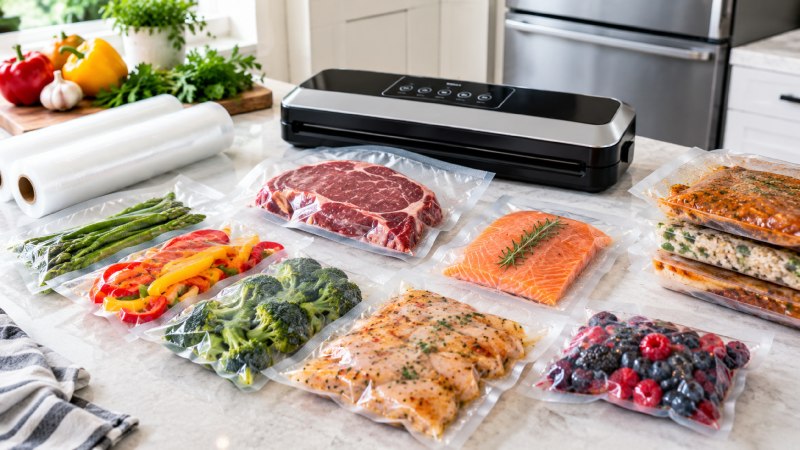
Finding the right bag starts with four practical details: the type of sealer you own, the size of the food package, the storage or cooking method, and how often you plan to seal products. Whether you are portioning family meals, packaging game meat, preparing restaurant ingredients, or organizing long-term pantry supplies, choosing compatible vacuum seal bags helps create a dependable seal and avoids wasting materials on bags that do not fit your equipment.
Vacuum Sealers Unlimited offers packaging supplies and equipment for home kitchens, hunters, fishermen, restaurants, meat processors, and other food-focused operations. Its product selection includes textured bags and rolls for countertop sealers, chamber pouches, zipper bags, stand-up pouches, Mylar bags, shrink bags, hand sealers, commercial machines, and food-processing equipment.
Start With the Type of Vacuum Sealer You Have
The most important part of a vacuum seal bag request is identifying the machine. A bag that works well in one system may not work correctly in another.
- Countertop suction sealers: These clamp-style machines generally need textured or embossed bags and rolls. The channels in the material help air escape from the bag during sealing.
- Chamber vacuum sealers: These machines place the entire bag inside a chamber, so they typically use smooth chamber pouches. Chamber systems can be especially useful when packaging liquids, sauces, soups, or marinades.
- Retractable nozzle sealers: These commercial machines use a nozzle to remove air from the package. Bag selection should match the machine specifications and the size of the product being packed.
For countertop users, Vacuum Sealers Unlimited offers textured bags and rolls intended for popular machines from FoodSaver, Weston, VacMaster, Cabela’s, Seal-a-Meal, and similar brands. Pre-cut bags are useful when you package familiar portions repeatedly. Rolls are often the better choice for large roasts, whole fish, irregular cuts, and meal-prep portions that vary in size.
Choose the Bag Format That Fits the Job
Not every storage goal calls for the same packaging format. Selecting a bag based on the food and the end use can make packing faster and more organized.
- Pre-cut textured bags: A convenient option for routine freezer portions, leftovers, individual proteins, and prepared meals.
- Textured rolls: Best for custom-length packages. Cut the material longer for a rack of ribs or shorter for a small portion of vegetables.
- Chamber bags: Suitable for chamber machines and often practical for moist foods, marinades, and higher-volume packaging work.
- Zipper and stand-up pouches: Useful when a package needs repeated access or a more presentation-focused format.
- Mylar bags and oxygen absorbers: Designed for particular dry-food and emergency-storage applications when used with an appropriate heat-sealing method.
- Shrink bags: Often selected for meat, cheese, and products that benefit from a close-fitting finished appearance.
Measure the product before ordering. A bag needs enough extra material at the open end to create a clean seal, but an oversized bag can use more material than necessary. For sharp bones, hard edges, or heavy frozen portions, consider a stronger packaging option and protect puncture-prone areas when appropriate.
Think about the contents as well. Dry foods and standard meat portions are usually straightforward to package. Liquids and wet marinades may be easier to handle with a chamber machine because the entire bag is sealed inside the chamber. Delicate foods also benefit from careful machine settings and sufficient clearance around the product to avoid crushing.
Use Vacuum Packaging as Part of a Smart Freezer Plan
Vacuum packaging can help reduce air exposure and improve organization in the freezer, but it is only one part of proper food storage. Portion bulk purchases before freezing, press packages flat where practical, and label every bag with the product name, packaging date, and planned use.
Better storage habits can also help households use what they buy. The EPA estimates that consumer food waste costs a household of four about $2,913 annually, so planning portions and using frozen inventory intentionally can help reduce waste. A vacuum-sealed bag is most useful when it is paired with realistic meal planning, clear labels, and timely use.
What to Know About Sous Vide Bags
For sous vide cooking, select bags that are specifically appropriate for the intended temperature and cooking application. Removing excess air helps food stay in contact with the surrounding water, which supports even cooking in a controlled water bath. Steaks, poultry portions, fish, vegetables, and prepared meals are common examples.
Do not assume that every storage bag is suitable for cooking. Review the manufacturer’s instructions for the particular bag or roll before using it for sous vide, boiling, microwave use, or any other heated application. The same care applies to the vacuum sealer itself, since machine capabilities differ.
Support for Commercial Kitchens and Meat Processing
Commercial packaging decisions go beyond choosing a bag size. Businesses like restaurants, deer and game processors, butcher shops, and food producers must consider product dimensions, liquid content, package appearance, volume, storage temperature, and speed. Vacuum Sealers Unlimited offers packaging supplies and equipment, including commercial vacuum sealers, shrink products, ground meat bags, roll stock, heat sealers, work tables, meat grinders, mixers, tenderizers, sausage stuffers, dehydrators, smokers, and poultry-processing tools. This range helps businesses match packaging with their processing workflow.
Food Safety Comes Before Shelf Life
Vacuum sealing does not make perishable food shelf-stable, and it is not a replacement for approved canning, dehydration, refrigeration, or freezing practices. The USDA explains that vacuum packaging removes air from a package, but perishable vacuum-packed foods still need refrigeration at 40°F or below or freezing at 0°F. Its guidance also notes that low-oxygen conditions can support certain harmful bacteria if food is handled improperly, so follow safe refrigeration and freezing temperatures at all times.
Thaw foods safely in the refrigerator, in cold water, or in the microwave so that they can be cooked promptly. Follow the instructions for the specific food, packaging material, sealer, and cooking method.
What to Include in a Vacuum Seal Bags Request
Providing clear details makes it easier to select a compatible product. Include the following information when requesting bags, rolls, pouches, or sealing equipment:
- Vacuum sealer brand, model, and machine type
- Bag width, length, and preferred package format
- Food or product being packaged
- Whether the contents are dry, moist, liquid, frozen, or sharp-edged
- Planned use, such as freezer storage, refrigerated storage, sous vide, pantry storage, or retail presentation
- Expected quantity, including whether case quantities are needed
- Whether you need pre-cut bags, rolls, zipper pouches, Mylar bags, oxygen absorbers, or heat-sealing supplies
Frequently Asked Questions
What is the difference between textured bags and chamber bags?
Textured bags are generally used with external suction sealers. Smooth chamber bags are designed for chamber vacuum sealers. Confirming the machine type before ordering is essential.
Are rolls better than pre-cut bags?
Rolls offer flexible sizing and can reduce the need to keep many bag sizes on hand. Pre-cut bags are faster when you repeatedly package the same portion.
Can vacuum-sealed food stay at room temperature?
No. Perishable food still requires safe refrigeration or freezing unless it has been processed using an appropriate shelf-stable preservation method.
Choose for Compatibility, Storage, and Workflow
The best vacuum seal bag is the one that fits the machine, protects the product, and suits the way you plan to store, cook, or sell it. By identifying your sealer type, food dimensions, storage conditions, and expected volume before ordering, home users and commercial operators can make a more accurate request for vacuum seal bags and build a packaging setup that works reliably.